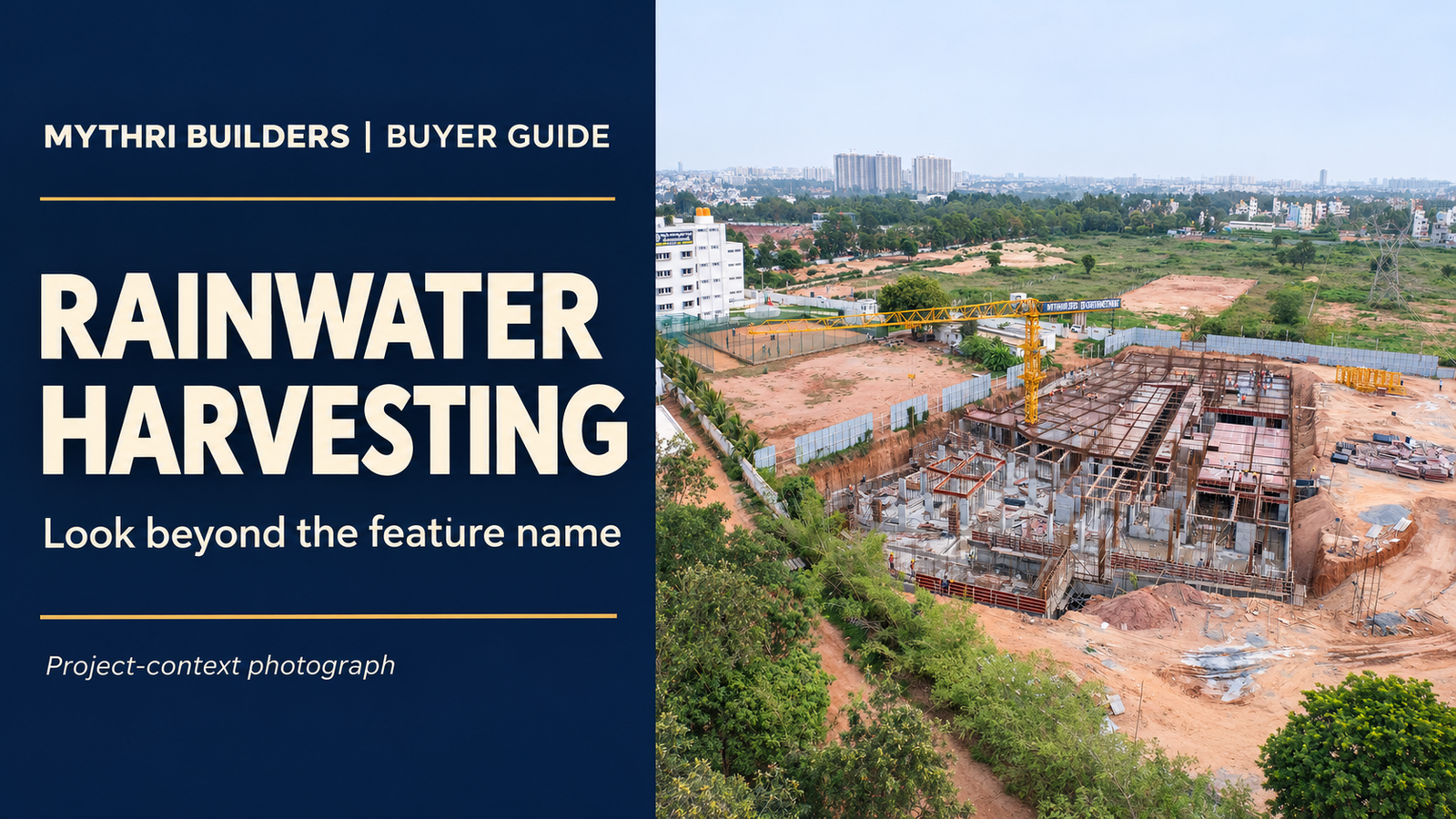
Ask how rainwater harvesting is designed, maintained and documented in an apartment community rather than relying on a specification label.
Rainwater harvesting is often listed as a standard feature in apartment marketing. To understand its practical value, buyers need a clearer picture of collection, treatment where relevant, storage or recharge, and maintenance.
A system can have different objectives. Some arrangements collect water for a defined use, while others support recharge. Ask the technical team to explain the proposed approach for the particular site instead of assuming every harvesting system works in the same way.
Follow the water route
Ask which surfaces collect rainwater and where it goes next. Request an explanation of filters, access points and the intended destination. The answer should relate to the current design, not a generic description of rainwater harvesting.
Do not equate a recharge structure with an unlimited supply of usable water. Actual performance depends on design, site conditions, rainfall and maintenance. Buyers should not accept guaranteed water savings without a clear basis and appropriate evidence.
Find out who maintains it
Filters, collection surfaces and related components need suitable attention. Ask for the proposed maintenance schedule and who will carry it out. Check whether access remains possible after landscaping and other work are complete.
The most attractive visible component may not be the most important operating detail. Maintenance instructions and records can tell future residents more about reliability than a photograph of the installation alone.
Check the documents and budget
Ask which drawings and approvals describe the arrangement, and what information will be handed over to the responsible residents' body. Clarify whether operating and periodic maintenance costs have been allowed for in the community budget.
Where the developer describes legal compliance, have the applicable requirements and supporting documents verified. The presence of a feature name in a brochure does not independently establish compliance for a particular property.
Use the official learning resource
BWSSB's rainwater-harvesting information is a useful educational starting point. It helps buyers understand the subject before discussing the specific design with qualified professionals.
When comparing Mythri Street with other communities, ask the same collection, use and maintenance questions of each project. That makes the comparison more meaningful than checking a box headed “rainwater harvesting.” A sustainable feature should have a clear operating story that residents can understand and maintain.
Explore Mythri Street
Discover more about this residential community and how it aligns with the insights from this article.
View Project Details